How AI decides which restaurants to recommend
AI assistants don't rank restaurants the way a search engine ranks links. They read what they can find about each place, then recommend the ones they understand well enough to describe with confidence.
That means the restaurants that win are the ones whose menu, hours, location, dietary options, and booking method are clear, current, and machine-readable. If an assistant can't verify a detail, it usually leaves the restaurant out.
Why most restaurants are invisible to AI
The information diners ask about is almost always there — it's just in a format assistants can't read. The most common blockers:
- Menus published as images or PDFs instead of readable text
- Hours that differ across Google, your website, and your booking app
- Dietary and allergen details missing, buried, or out of date
- Reservation and walk-in policies that live only inside a booking tool
To a human, your website looks complete. To an AI assistant, half of it is a locked door.
What AI needs to recommend your restaurant
Give assistants a clean, current answer to the questions diners actually ask:
- An up-to-date menu with prices and dietary tags (vegan, gluten-free, halal)
- Hours, including holidays and last seating or kitchen-close times
- Whether you take walk-ins, reservations, or both — and exactly how to book
- Location, parking, and accessibility
- Your signature dishes and what you're known for
How diners actually find restaurants through AI
The prompts sound like real conversations: "best gluten-free pasta near me," "where can I get a table for six tonight," "kid-friendly brunch open now." Over 60% of consumers already use AI assistants somewhere in their buying journey, and the assistants are shifting from answering to acting — soon they'll shortlist, check availability, and book on the diner's behalf.
The restaurants that are easy for AI to understand today are the ones those assistants will recommend and book tomorrow.
How Courtyard makes your restaurant AI-readable
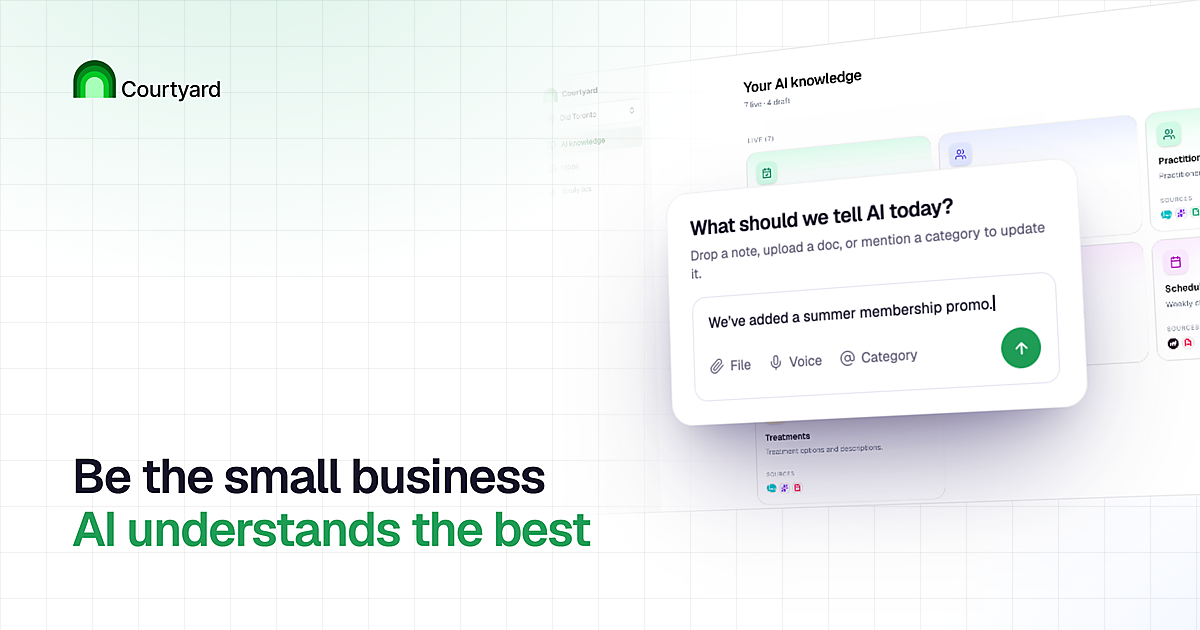
Courtyard builds a living AI knowledge base for your restaurant and publishes it in a form ChatGPT, Gemini, Claude, and other assistants can read and reason over. It pulls together what's scattered across your website, menus, and booking software, keeps it current as specials and hours change, and shows you how often AI finds you and what it says about you.
No new website. No SEO tricks. Just a business that AI finally understands — starting at $20/month.
Frequently asked questions
Does ChatGPT actually recommend specific restaurants?
Yes. When asked where to eat, assistants like ChatGPT, Gemini, and Perplexity name specific restaurants, drawing on the information they can find and verify about each one. Restaurants with clear, current, machine-readable details are far more likely to be recommended.
How do I get my restaurant to show up in ChatGPT or Gemini?
Make your key details — menu, hours, dietary options, and how to book — easy for AI to read, and keep them current. Courtyard does this automatically by building a live AI knowledge base for your restaurant that works across the major assistants.
Why is AI showing the wrong hours or menu for my restaurant?
Assistants pull from whatever they can find, which is often outdated pages, image menus they can't read, or conflicting listings. The fix is giving AI one current, structured source of truth for your restaurant.
Do I need a new website for AI to find my restaurant?
No. Courtyard publishes an AI-readable knowledge base for your existing business, so assistants can understand it without a new website or developer.