If you're running a small business or building a startup in 2025, you've probably started to hear whisperings about ChatGPT apps. Maybe you've seen how Spotify creates playlists or how Zillow shows property listings directly in conversations. You might be wondering: "Should my business be in there too?"
This isn't just another technology trend to evaluate. The ChatGPT app ecosystem represents a fundamental shift in how customers discover and interact with services. With over 800 million users and 300 million weekly active users, ChatGPT has become where millions of people start their day, ask questions, and solve problems. The question isn't whether this platform matters—it's whether being on it matters for your business right now.
This guide will help you make that strategic decision. We'll cut through the hype, look at the real opportunities, assess the risks of waiting, understand what building actually requires, and explore how businesses like yours can move quickly without massive technical investments.
The Strategic Opportunity: Why Now Matters
Let's start with the uncomfortable truth: you're early, but the window could close fast for early mover advantages.
The Early Mover Advantage Is Real
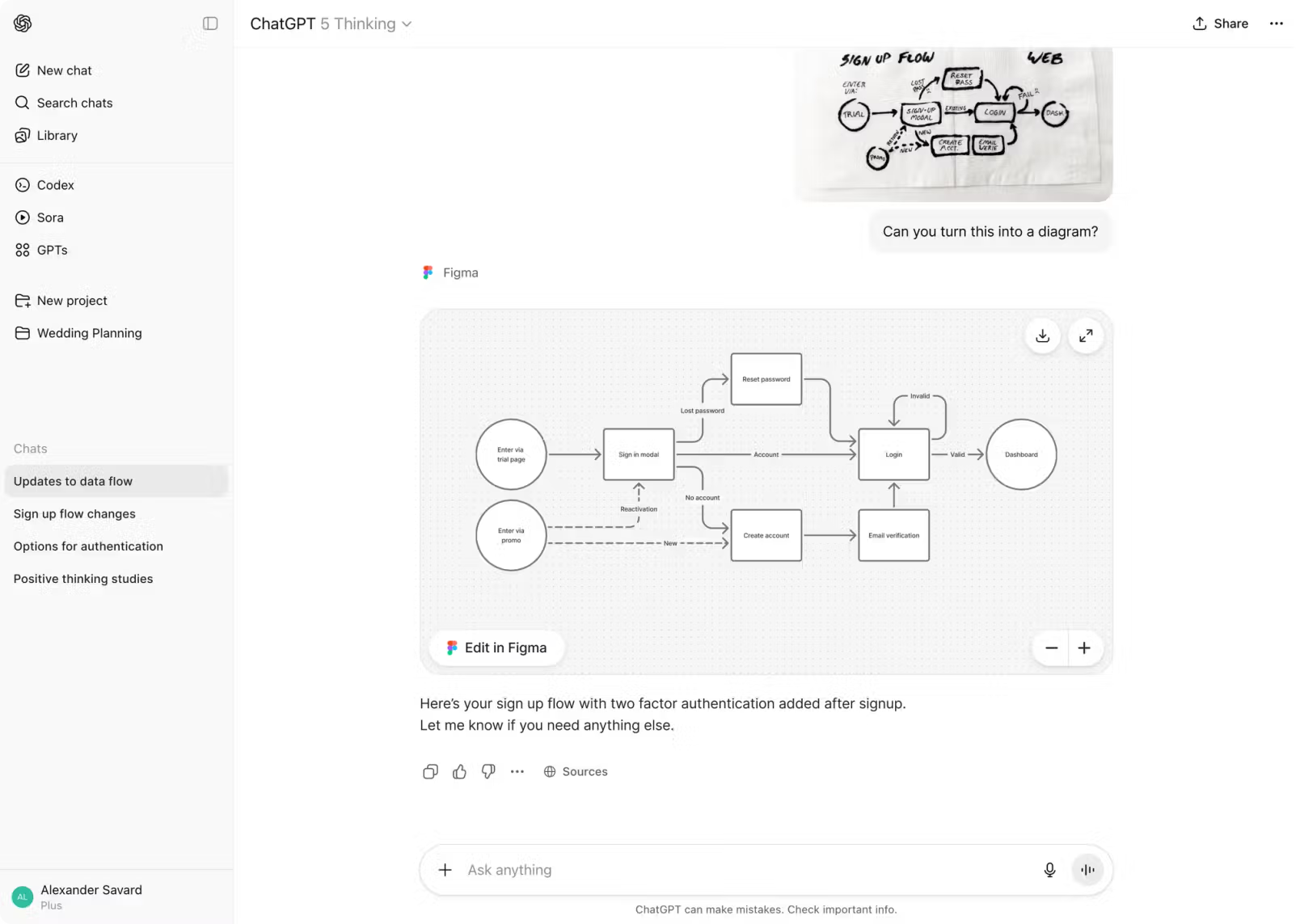
OpenAI launched the Apps SDK on October 6, 2025, with seven carefully selected launch partners. These household names—Spotify, Canva, Zillow, Expedia, Booking.com, Coursera, and Figma—are establishing themselves as the default solutions in their categories. When ChatGPT users think about music, they think Spotify. Real estate? Zillow. Travel? Expedia and Booking.
But here's the opportunity: OpenAI announced that "later this year" they'll open app submissions to all developers. That means in the coming weeks or months, the floodgates open. Your competitors—the ones paying attention—are building right now. They're preparing to submit the day the process opens. They're positioning to be the first in your category when the app directory launches. Aggregators platforms and marketplaces like Expedia, Thumbtack, Instacart and Open Table as all moving quickly to launch apps, which mean they might be the first-touch for your audience in this new massive channel.
Being early in a platform ecosystem compounds. The first high-quality apps in a category tend to:
- Build brand recognition as the solution for that use case
- Accumulate positive reviews and user trust before competition arrives
- Gain algorithmic advantages from sustained usage patterns
- Establish direct relationships with platform operators
- Shape user expectations for what apps in the category should do
Think about the early apps on iPhone, early stores on Shopify, early plugins for WordPress. The pattern repeats: early quality wins. Late arrivals fight uphill battles.
The Discovery Advantage You Can't Buy
Traditional customer acquisition is expensive and getting worse. Google Ads in competitive categories can cost $50, $100, even $200 per click for high-intent keywords. Facebook ads face diminishing returns. SEO takes months to years to build meaningful traffic.
ChatGPT apps offer something different: AI-powered discovery at the moment of expressed need.
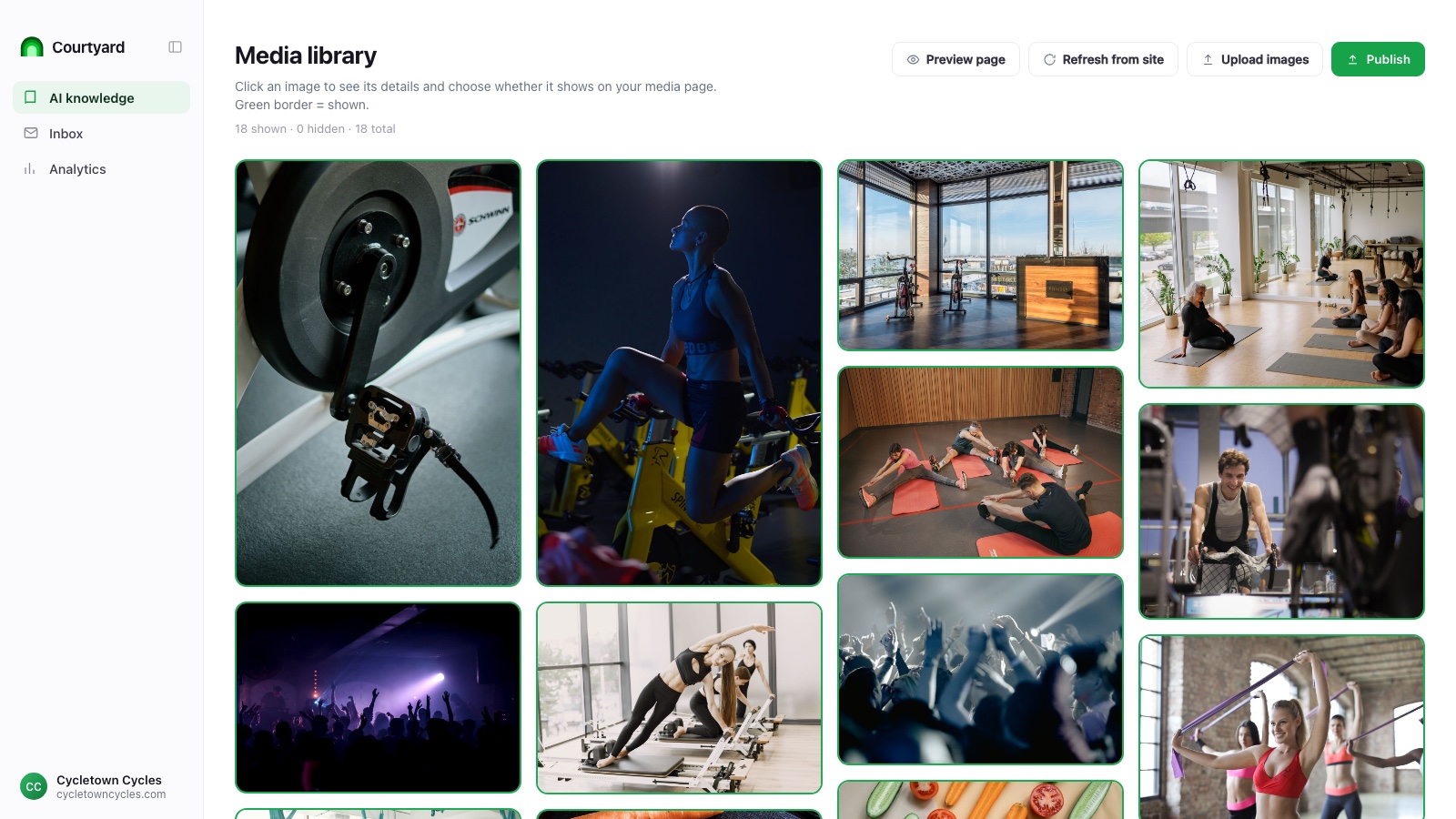
When someone asks ChatGPT "HIIT classes on saturday morning near me" and your wellness studio’s app could surface with your class schedule, you've reached a potential member without paying for the click. When someone mentions needing estate planning and your assessment tool appears, you've been discovered without competing in search results.
This contextual discovery—where the AI suggests your service exactly when users need it—doesn't exist anywhere else at this scale. You can't buy that placement. You can't bid on it like ads. The only way to access it is to have an app.
Small Businesses Can Actually Compete
Here's what makes this different from previous platform shifts: ChatGPT apps don't require massive engineering teams or million-dollar budgets to be competitive. The launch partners are big brands, yes, but they're not competing on resources—they're competing on utility.
A small business that solves a specific problem really well can get as much visibility as a Fortune 500 company that solves it poorly. The discovery algorithm doesn't care about your marketing budget. It cares about whether your app genuinely helps users accomplish what they're trying to do.
This is the brief moment when a three-person startup, multi-location service business, and a major enterprise are on equal footing. It won't last forever, but it exists today.
The Strategic Question: Should Your Business Build a ChatGPT App?
Not every business needs a ChatGPT app. The decision depends on your specific circumstances, business model, and customer behavior. Let's think through it strategically.
When It Makes Sense: The Green Light Scenarios
You Solve Discrete, Immediate Problems
If your business provides calculations, assessments, initial consultations, or information lookup that delivers value in minutes, ChatGPT apps are ideal. Property closing cost calculators, estate planning assessments, insurance estimators, coverage checkers, appointment schedulers, service provider quotes and bookings —these all work beautifully.
The pattern: quick utility that demonstrates value and creates a pathway to deeper engagement. You're not trying to complete the entire transaction in ChatGPT—you're proving you can help, providing value right inside ChatGPT, then inviting users to your full service.
Your Target Customers Are Already Using ChatGPT
If your customers are tech-forward consumers, or anyone under 40, there's substantial overlap with ChatGPT's user base. The platform skews educated, digitally savvy, and willing to adopt new tools. If that describes your market, you can reach them where they already are.
You're Fighting Expensive Customer Acquisition
When your cost per qualified lead exceeds $50-100 through paid channels, or when organic reach has plateaued, ChatGPT apps offer an alternative acquisition channel. You're not replacing existing channels—you're adding a new one that might deliver leads at dramatically lower effective costs.
You Need to Establish Category Presence
In competitive markets where multiple businesses offer similar services, being present on emerging platforms establishes you as innovative and forward-thinking. It's not just about the direct leads—it's about the positioning advantage of being "in ChatGPT" while competitors remain website-only.
When to Wait: The Yellow Light Scenarios
Your Service Requires Extensive Back-and-Forth
If your sales process involves 10+ email exchanges, multiple stakeholder meetings, and complex negotiations, ChatGPT apps probably aren't the right fit yet. Apps excel at top-of-funnel discovery and simple interactions, not complex multi-week sales processes.
Your Business Is Hyper-Local
If you serve only a specific neighborhood or small region, ChatGPT's current global scale might not align with your customer base. Apps work best when they can serve users across broader geographies. A single-location restaurant probably doesn't need an app; a regional chain might.
You Have No Digital Presence
If you don't have a website, don't use email, and handle everything through phone calls and in-person meetings, you're probably not ready for ChatGPT apps. Get your digital foundations in place first.
When It's Probably Not Worth It: The Red Light Scenarios
You're Solving Problems People Don't Ask ChatGPT About
Be honest: do people naturally express needs your business solves when talking to an AI assistant? If the answer is no, contextual discovery won't help you. You can't force relevance.
You're Not Ready for Digital Lead Follow-Up
Apps generate leads. If you can't promptly follow up via email, phone, or automated systems, those leads are wasted. Make sure you have processes to handle inbound interest before adding a new channel.
The Reality of Building: What It Actually Takes
Let's say you've decided a ChatGPT app makes strategic sense. Now comes the practical question: what does building one actually require?
The Technical Requirements
Building a ChatGPT app involves several technical components:
An MCP Server
This is your backend that handles business logic, processes requests from ChatGPT, and returns structured responses. You'll need developers comfortable with Python or Node.js, API design, and server architecture.
Interactive Widgets
These are the visual interfaces users see in ChatGPT—your forms, results displays, calculators, or interactive tools. They require frontend development skills: HTML, CSS, JavaScript, often React.
Infrastructure and Hosting
Your MCP server needs to be accessible over HTTPS with valid certificates, handle production traffic reliably, and scale to meet demand. This means cloud hosting, monitoring, logging, and all the operational considerations of running production services.
Security and Authentication
If your app requires user login, you'll need to implement OAuth 2.1 correctly with PKCE. Even if it doesn't, you need comprehensive input validation, protection against prompt injection, and proper data handling.
Compliance and Privacy
Every app needs a thorough privacy policy, clear data practices following the "least privilege" principle, and compliance with OpenAI's developer guidelines and any regulations specific to your industry.
The Time Investment
For a development team building their first ChatGPT app from scratch, realistic timelines look like:
- Planning and Design: 1-2 weeks to define use cases, design user flows, and create detailed specifications
- Development: 2-4 weeks to build the MCP server, widgets, and business logic
- Testing and Refinement: 1-2 weeks of comprehensive testing, iteration, and polish
- Documentation and Compliance: 3-4 days for creating privacy policies, support infrastructure, and submission materials
Total: 1-3 months from decision to ready-for-submission, assuming you have developers available and they're not juggling other priorities.
For small businesses, this creates a dilemma. You need to be early to capture the opportunity, but building from scratch takes months. By the time you're ready, the early mover advantage may have eroded.
The Cost Reality
If you're hiring developers or an agency, expect costs ranging from:
- Freelance developers: $5,000-15,000 for a basic app
- Development agencies: $15,000-50,000 for a polished, production-ready app
- In-house team time: Equivalent to several person-months of engineering work
These aren't insignificant investments for small businesses and startups. And they assume you know exactly what to build—many businesses will spend additional money discovering what doesn't work before finding what does.
The Knowledge Gap
Perhaps the biggest hidden cost: you're pioneering. ChatGPT apps are new enough that best practices are still emerging. You'll make mistakes, iterate on approaches that don't work, and learn lessons that someone else has already learned but hasn't published yet.
This discovery tax—the time and money spent figuring out what works—is highest for early builders working in isolation.
The Courtyard Advantage: Getting to Market Fast
This is where Courtyard changes the equation. Instead of building from scratch, spending months on development, and paying the pioneer tax on your own, you can leverage a platform purpose-built for businesses like yours to launch ChatGPT apps quickly and professionally.
What Courtyard Provides
Pre-Built Templates for Common Use Cases
Courtyard has already built the foundational patterns that small businesses need: calculators, assessments, lead capture forms, appointment schedulers, and more. These templates embody best practices learned from building ChatGPT apps across different industries.
Instead of starting with a blank screen, you start with a working foundation and customize it to your specific business needs. This compresses development timelines from months to days.
Technical Infrastructure That Just Works
The hard technical parts—MCP server architecture, widget frameworks, hosting infrastructure, security implementations—are handled. You don't need to hire developers to figure out OAuth 2.1 or debug WebSocket connections. The platform provides tested, production-ready infrastructure.
This means you focus on your value proposition rather than technical plumbing.
Best Practices Built In
Courtyard's templates incorporate lessons from successful launch partner apps and early implementations. You benefit from:
- Metadata optimized for contextual discovery
- UI patterns that follow OpenAI's design guidelines
- Privacy policies and data handling that meet compliance requirements
- Widget architectures that work across desktop, tablet, and mobile
- Input validation and error handling that prevent common issues
You're not learning these lessons yourself through trial and error—you're applying proven patterns from day one.
Faster Time to Market
Where custom development takes 1-3 months, Courtyard-powered ChatGPT apps can be ready to submit in days. This speed advantage means you can capture early mover positioning that would otherwise be unreachable given your resource constraints.
Time matters in platform adoption. The difference between launching in December 2025 and March 2026 could mean the difference between being among the first in your category or fighting for position against dozens of competitors.
Ongoing Updates and Optimization
The ChatGPT app ecosystem will evolve. OpenAI will introduce new capabilities, update guidelines, and change requirements. Building custom means maintaining your app yourself as the platform shifts.
Courtyard handles platform evolution. When OpenAI releases new widget components, updates authentication requirements, or changes best practices, the underlying platform adapts and your app benefits automatically.
Who Courtyard Is For
Courtyard makes sense for businesses that:
- See strategic value in ChatGPT apps but lack internal development resources
- Want to be early without the risk of building the wrong thing
- Need production-ready quality but can't justify $30k+ in custom development
- Prefer to focus on their core business rather than becoming AI platform experts
- Value speed to market and professional implementation
If you're a service business, professional practice, or B2C company with clear use cases for ChatGPT apps but don't have a technical co-founder or in-house engineering team, Courtyard is built for you.
Making the Decision: A Framework
Let's bring this back to the strategic question: should your business build a ChatGPT app?
Ask yourself these questions:
- Do people naturally express needs my business solves when talking to AI assistants? If yes, contextual discovery can work for you.
- Can I provide immediate value in a brief interaction that leads to deeper engagement? If yes, the app interaction model fits your business.
- Do I have the technical resources to build from scratch in the next 1-3 months? If no, you need a platform solution or should wait—but waiting has costs.
- Will my competitors likely build apps once submissions open? If yes, you need to decide whether to lead or follow.
- Will an aggregator platform or marketplace in my industry likely launch an app? If yes, your business might lose more traffic to that aggregator in this new channel.
- Can I commit to supporting and maintaining an app once it's live? If no, you're not ready regardless of how you build.
If your answers suggest an app makes sense but you lack technical resources to build quickly, Courtyard solves that exact problem. If your answers suggest an app doesn't align with your business model, be honest about that—not every business benefits from every platform.
The Cost of Waiting
Here's what you're trading off if you decide to wait:
- Early discovery advantage to competitors who move now
- Brand positioning as innovative and accessible where customers are
- The learning curve that compounds over time as you understand what works
- Category definition opportunity to shape expectations before standards solidify
- Direct relationships with platform operators who remember early builders
Waiting isn't inherently wrong—sometimes it's strategic. But make sure you're waiting for good reasons rather than bad ones (uncertainty, complexity aversion, hoping it goes away).
The businesses that will struggle most are those who wait too long and then rush to catch up when they realize they've been left behind. Move deliberately but decisively.
Getting Started: Next Steps
If you've decided a ChatGPT app makes strategic sense for your business, here's how to move forward:
If You're Building Yourself
- Study the documentation at developers.openai.com/apps-sdk
- Enable Developer Mode in ChatGPT and experiment with existing apps
- Define your use case with extreme clarity before writing code
- Build a working prototype and test it extensively with real users
- Prepare compliance materials (privacy policy, support infrastructure)
- Be ready to submit immediately when the process opens
If You're Working with Courtyard
Reach out to us via this form and we’ll get in touch to schedule a quick call to learn more about your business.
The choice between these paths depends on your resources, timeline, and risk tolerance. Building yourself offers maximum control but requires significant capability and time. Courtyard offers speed and best practices but means working within platform patterns.
For most small businesses and startups, the speed advantage and reduced risk of the platform approach outweighs the flexibility of custom development. But you know your business best.
Conclusion: The Window Is Open, But Not Forever
ChatGPT apps represent a genuine opportunity for small businesses to reach customers at scale in ways that weren't possible before. The combination of AI-powered discovery, 800 million users, and early-stage ecosystem dynamics creates a moment where smart, nimble businesses can establish meaningful competitive advantages.
But this moment is finite. As submissions open, as the ecosystem matures, as competitors wake up to the opportunity, the advantages of being early diminish. The businesses that will capture the most value are those moving now—building thoughtfully but decisively.
The opportunity is here.